

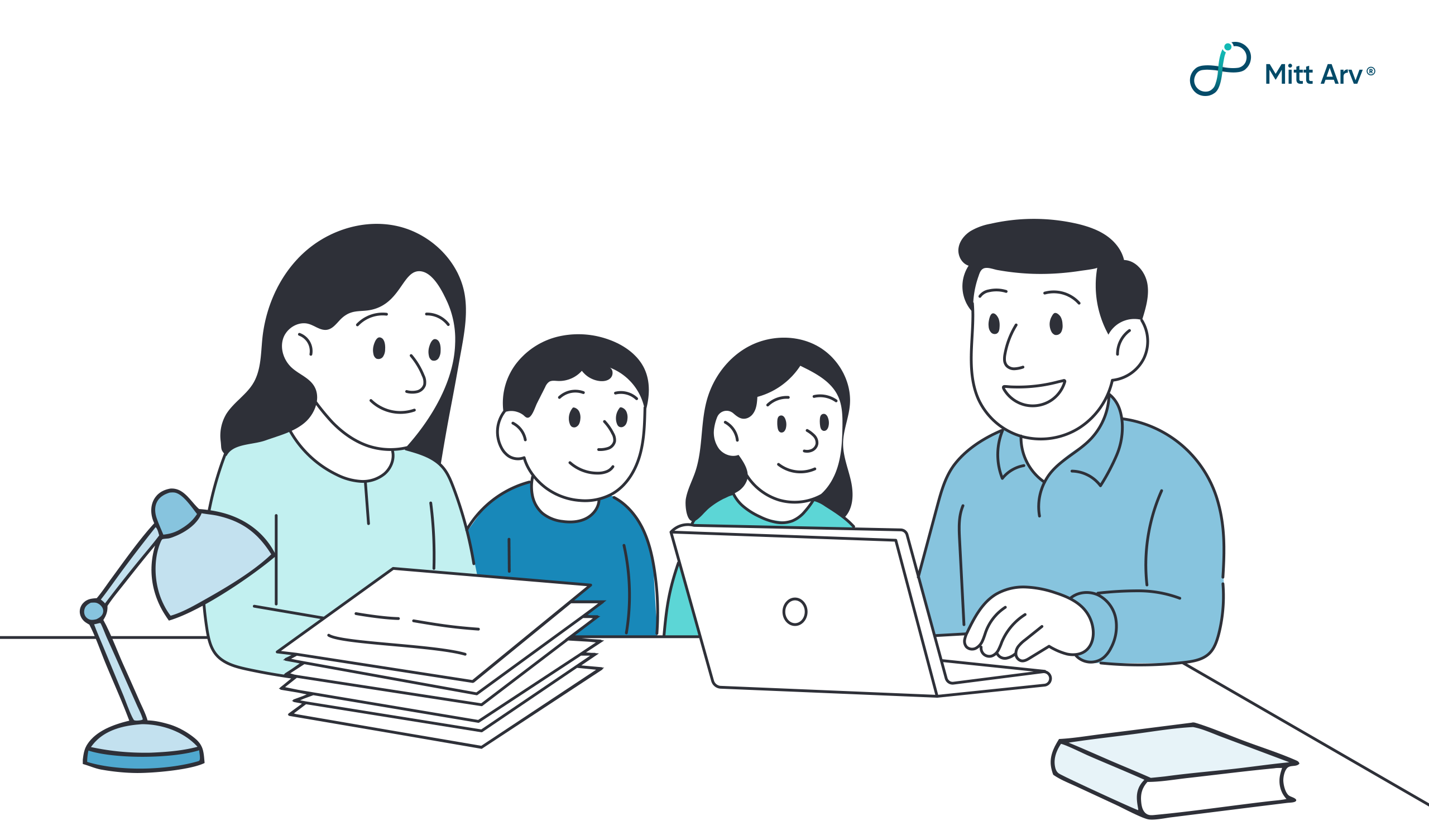
Your legacy is not just what you leave behind. It is what your children carry forward. Start building and preserving your family legacy with Mitt Arv today.
When parents think about leaving a legacy for their children, money and property are often the first things that come to mind. A house, investments, jewellery, insurance policies, or savings can certainly form an important part of an inheritance. But a meaningful family legacy goes far beyond financial assets.
The stories you tell, the values you teach, the traditions you preserve, and the memories you create can stay with your children long after material possessions have been passed on.
So, how do you leave a legacy for your children? It starts with intentionally preserving both what you own and what you want your family to remember.
1. Pass on Your Family Stories
Every family has stories. Some are dramatic. Others are ordinary moments that only become meaningful with time.
Stories about your childhood, grandparents, struggles, achievements, important decisions, and family traditions can help children understand where they came from. Recording these memories through written notes, photographs, audio, or video can ensure they are not lost over generations.
Science Care similarly recommends preserving family stories, personal experiences, traditions, photographs, recipes, and even family trees as part of creating a lasting legacy.
Your children may forget the details of a family dinner. They are less likely to forget the story you told them about how their grandparents built their life from nothing.
2. Teach Values, Not Just Rules
A family legacy is also about family values.
Teach your children the principles that shaped your life. Honesty. Patience. Responsibility. Curiosity. Determination. Kindness. Financial discipline.
But values are rarely learned from lectures. Children learn by watching what their parents do.
The lessons can also come through shared experiences. Spending time outdoors, travelling together, working on something as a family, or simply having conversations without a screen between everyone can teach patience, communication, focus, confidence, and determination. These are among the life lessons highlighted by Tupper Lake’s guide for parents.
The best inheritance may therefore be a habit, principle, or way of thinking that your child carries into adulthood.
3. Preserve Family Traditions
Traditions give families a sense of identity.
It could be a particular festival ritual, a recipe passed down through generations, an annual family trip, or something as simple as everyone gathering for dinner on a particular occasion.
Write these traditions down. Photograph them. Record the stories behind them.
This matters because memories become harder to reconstruct with every generation. A recipe without its story is just instructions. A photograph without names is just a collection of faces.
Preserving the context makes your family history meaningful.
4. Share Skills and Life Lessons
A legacy can also be something you teach.
Maybe you know how to repair something, manage money, cook a family recipe, negotiate, run a business, invest, or handle difficult situations. These practical skills can become part of your child’s inheritance.
More importantly, share the lessons behind your decisions.
Tell your children about mistakes you made, risks you took, and opportunities you missed. They do not need a perfectly polished version of your life. They need something real enough to learn from.
5. Create Memories They Can Keep
Material possessions eventually change hands, get sold, break, or disappear.
Memories work differently.
Take photographs together. Record family occasions. Travel. Celebrate milestones. Spend time doing things your children will remember decades later.
A legacy is not created only at the end of life. It is built throughout life, one experience at a time.
6. Organise Your Financial Legacy
There is another side to leaving a legacy for your children that should not be ignored: making sure your assets can actually reach them.
Your family may have bank accounts, investments, insurance policies, property, jewellery, digital assets, pensions, or assets spread across different countries. If this information is scattered or known only to you, your family may struggle to identify and access it when it matters most.
This is where legacy planning and estate planning become important.
Create a clear record of your assets, important documents, beneficiaries, and instructions. Keep your Will updated and make sure your family knows where essential information can be found.
Because leaving behind wealth is one thing. Making that wealth discoverable and organised for your family is another.
7. Build a Legacy Your Children Can Access
Your legacy should not depend entirely on your children remembering where you kept an old file, password, document, or investment statement.
Mitt Arv helps families organise important assets, documents, family information, and legacy-related instructions in one secure platform. From financial assets and property to important documents and personal messages, families can create a structured record of what matters.
A legacy is ultimately about continuity. It is about making sure the people you love can understand what you built, what you valued, and what you left behind.

Start Building Your Family Legacy Today
Your children may inherit your money. But they can also inherit your stories, values, memories, wisdom, and the structure you created to protect what you built.
Start preserving your family legacy with Mitt Arv. Organise your assets, protect important information, and leave your children more than an inheritance. Leave them a legacy.