

Introduction
Grief does not end at the funeral.
For many people, that is where the real psychological battle begins. Studies show that between 49% and 70% of individuals experience severe mental health distress after losing a loved one. Research also indicates that suicidal thoughts can appear in up to 49% of bereaved individuals. Depression. Anxiety. PTSD. Emotional numbness.
When we talk about how to cope with death in family, we often focus on rituals, condolences, and time passing. But the deeper struggle is internal. It is the sudden lack of emotional safety.
A familiar voice is gone. A supporting presence vanishes. The person who understood your private fears and personal history is no longer there to reassure you.
The world does not just lose a person. It loses an anchor.
And the ones left behind must learn to stand without it.
2. Why Grief Feels Permanent ?
In 1969, the Swedish-American Psychiatrist Elisabeth Kübler-Ros, explained what grief truly is in her book “On Death and Dying”, according to her, grief was not a “problem” to be solved or a clinical disorder; it was a natural, adaptive response to loss. Elisabeth Kübler-Ross’s philosophy moves away from the idea of “closure” and focuses instead on the concept of integration. Here is that perspective broken down into key points:
- The Price of Love: She believed that the intensity of pain is a direct reflection of the depth of the bond; essentially, grief is the natural cost of having loved someone deeply.
- A Natural Bridge: Grief acts as the transition between a person’s “old reality” (the life shared with the loved one) and their “new reality” (a world where the loved one is physically absent).
- Integration over “Moving On”: The goal of the grieving process is not to “get over” or forget the person, but to integrate the loss into your ongoing life story.
Integration of pain seems impossible because the suffering is real. We think that the pain is going to be the same forever and what intensifies it is the belief that the things will never be the same again.
Understanding how to cope with death in family requires recognizing this psychological distortion. The mind treats grief as a permanent condition, when in reality, it is a process. It evolves. It reshapes. It softens in edges over time, even if it never disappears entirely.
Grief is not a weakness. It is an attachment refusing to vanish overnight.
3. How Perspective Helps Healing After a Family Loss
One mental model that helps regulate overwhelming emotion is simple:
Will this matter in a week?
In a year?
In ten years?
In everyday problems, this question creates distance. Psychologists call it temporal distancing. When we imagine viewing today’s problem from our future self, its intensity often reduces. Now, grief is different. Loss will matter in a year. It will matter in ten years. So the question shifts.
Instead of asking whether it will matter, ask:
What are the first steps to take after a death in the family ?
The immediate period following a loss is often a blur of “brain fog” and decision fatigue. While the world demands paperwork, your mind needs a moment to simply breathe and acknowledge the gravity of the change.
Here are the essential first steps for psychological and emotional stabilization:
- Practice “The 10-Minute Rule”: Give yourself permission to step away from the crowds and mourning rituals for ten minutes every few hours to sit in silence or focus on your breathing.
- Assign a “Grief Gatekeeper”: Designate one trusted person to handle the influx of phone calls and repetitive questions so you aren’t forced to “perform” your grief or recount the details constantly.
- Prioritize Somatic Needs: Grief is physically exhausting; focus on “micro-tasks” like drinking a glass of water or eating small, frequent meals to prevent physical burnout.
- Acknowledge Emotional Volatility: Understand that “grief bursts”—sudden waves of anger, numbness, or even laughter—are normal neurological responses and not a sign of instability.
But most importantly, learning how to cope with death in family is not about minimizing loss. It is about choosing how to integrate it into your life story rather than letting it define your entire identity.
Perspective does not erase pain. It prevents pain from becoming your only narrative.
4. The Time Lens Ladder That Changes Emotional Reactions
Think of time like a ladder with different steps. Each step helps you see your problems in a different way.
The 10-minute step helps you calm down before reacting. If you are angry or upset, waiting a few minutes can stop you from saying or doing something you regret.
The 1-week step helps you stop overthinking. A bad day can feel like a disaster, but when you ask, “Will this matter next week?” The problem often feels smaller.
The 1-year step helps you focus on growth. Instead of thinking about one bad moment, you start thinking about habits, learning, and becoming stronger over time.
The 10-year step makes you think about who you want to become. It helps you see the bigger picture of your life.
When someone you love passes away, the pain feels huge and unbearable. At the moment, it feels like everything is broken forever. But with time, your view slowly changes. The pain may not disappear, but you learn how to carry it.
Grief can change from sharp pain into quiet strength. Not because you forget the person, but because you slowly build your life around the loss.
Many times, suffering feels worse because of how we think about it. And the good news is, the way we think can change.
5. What Do the Stoics Say About Death ?
Two thousand years ago, Marcus Aurelius wrote in Meditations:
“You could leave life right now. Let that determine what you do and say and think.”
This was not morbid. It was clarifying.
The Stoics believed that mortality sharpens priorities. Death does not make life meaningless. It makes it precious. Here are some key ideas to takeaway from the Stoic philosophy on grief :
- The “Borrowed” Concept: He believed we do not “own” our loved ones; they are “lent” to us by the universe. Therefore, when they are gone, we are not losing something that was ours, but simply returning it to the universe.
- Control Your Perspective: famously taught that “The soul becomes dyed with the color of its thoughts.” He argued that while we cannot control the event of death, we can control our judgment of it. If we stop telling ourselves “this is a catastrophe,” the sting of the grief lessens.
- The “View from Above”: He practiced a mental exercise of looking at the world from a great height. From that perspective, individual losses, while painful, are part of a massive, beautiful, and eternal cycle of life and death that has existed for millennia.

Understanding mortality helps with how to cope with death in family because it shifts the focus from “Why did this happen?” to “What truly matters now?”
It encourages forgiveness. Gratitude. Intentional living.
But here is the important distinction: the death lens should create humility, not hopelessness. The fact that life ends does not invalidate love. It intensifies its value.
6. The Emotional Legacy We Leave Behind
Here is something uncomfortable.
We prepare financially for death. We write wills. We secure documents. We insure assets.
But very few people prepare emotionally.
When someone dies without leaving intentional words behind, their loved ones are left with unanswered questions. Regrets. Silence.
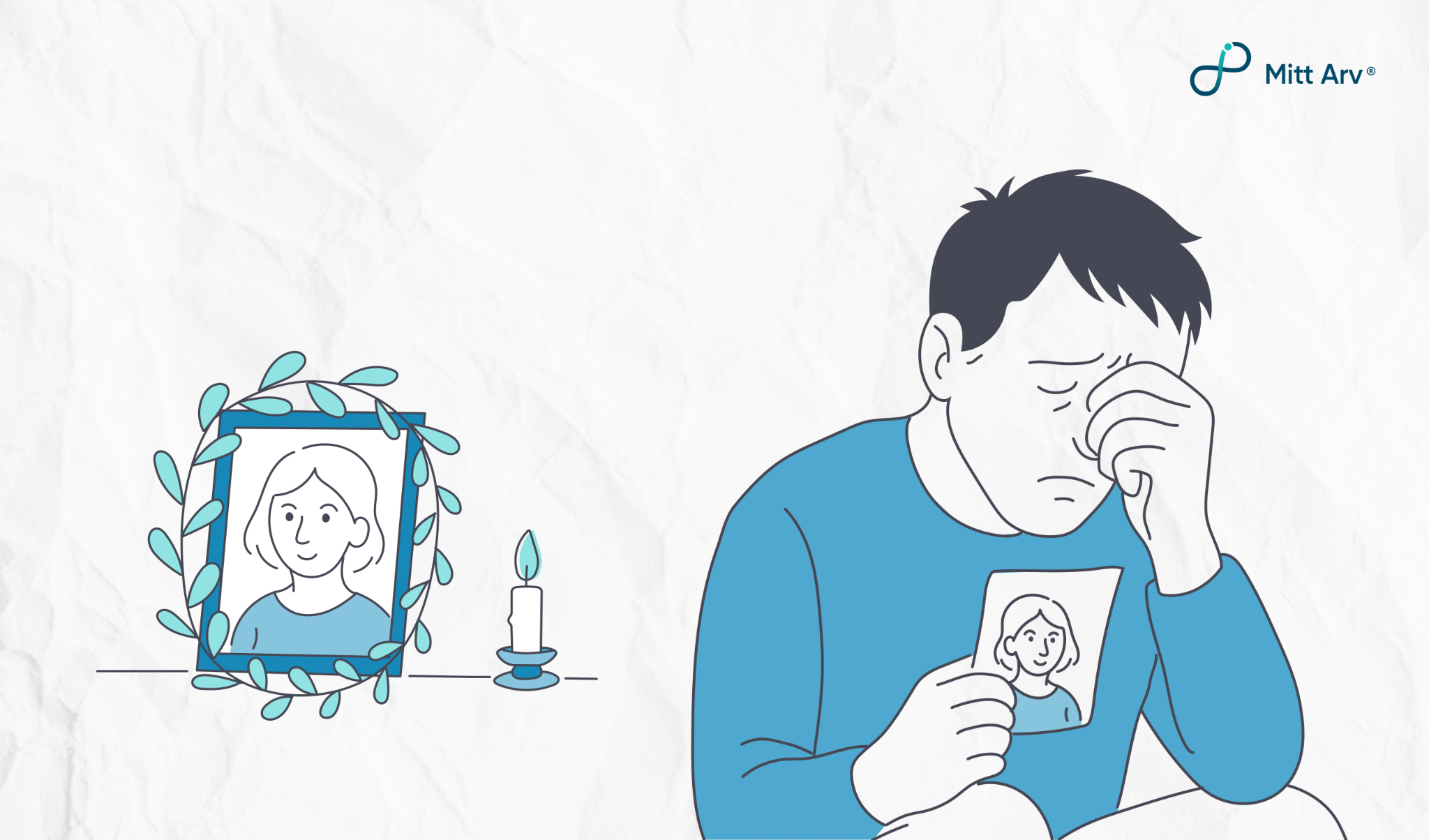
Consider a child losing his mother;, for him, it is not just losing a person but losing a safe place. He waits for her voice in the quiet, hoping to hear her call his name one more time. He needs her guidance, her advice, her simple words that make everything feel okay. Growing up without a final goodbye feels like carrying an empty space in his heart. Some words of love stay unspoken forever, and that silence hurts the most.
In moments of deep grief, reassurance can become a lifeline. A final message saying:
“I am proud of you.”
“Take care of each other.”
“Keep going.”
These words do not eliminate sorrow. But they prevent despair from mutating into isolation.
One powerful approach to how to cope with death in family is to recognize that the connection does not have to vanish completely. It can transform. Through memory. Through recorded messages. Through preserved guidance.
Love does not end at death. Love continues with their memories, final words, and the impact they had on us. But if these things matter so deeply in coping with grief, how do we preserve them?
7. Mitt Arv’s Emotional Will: A Practical Way to Protect Your Loved Ones

This is where preparation becomes meaningful.
Mitt Arv offers an Emotional Will feature that allows you to leave behind personalised messages, texts, audios, and videos for the people who matter most.
Think about that carefully.
In the worst moment of someone’s life, when they are searching for stability, your voice could still reach them.
Not randomly. Not accidentally. Intentionally.
Mitt Arv’s Emotional Will is not about fear. It is about responsibility. It allows you to :
- Deliver personalised messages (text, audio, video) to chosen loved ones at the right time.
- Choose to share them while being terminally ill or posthumously.
- Ensure your legacy includes love and wisdom, not just assets.
Because leaving assets is practical, but leaving words is powerful.
Create your Emotional Will. Leave clarity instead of confusion. Leave love instead of silence. Because sometimes, a few heartfelt words can become the difference between pain and hope.