

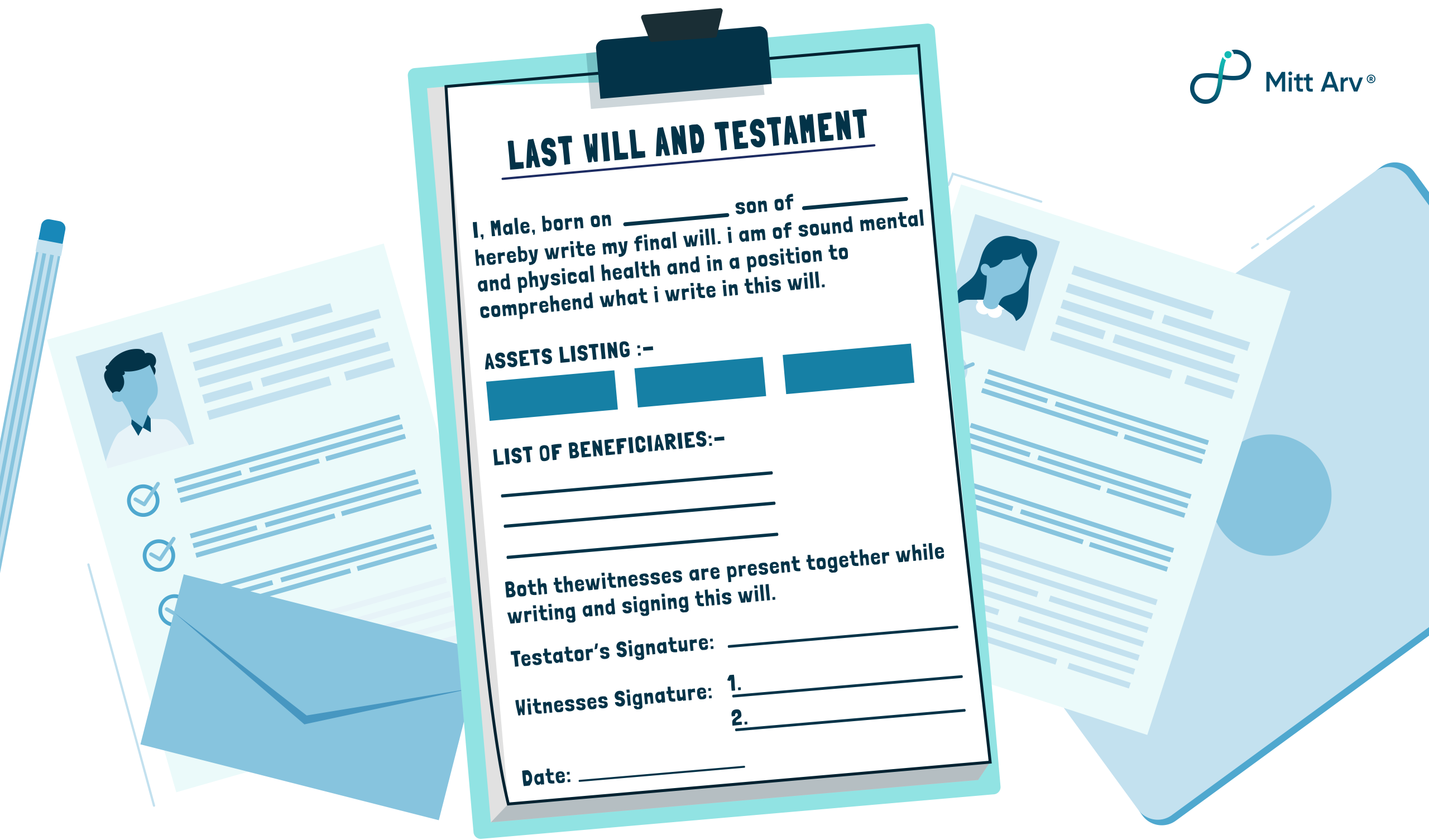
Mistakes in a will are often discovered during probate, when the testator has already passed away and can no longer clarify their intentions. This places an emotional and legal burden on the family, who must resolve conflicts and navigate court procedures. This only adds stress in an already emotionally difficult time. Although wills don’t necessarily need to be written on stamp paper, small mistakes can invalidate the will, making it difficult to comprehend and execute it.
Consider the case of 68-year-old Rajan Shah from Mumbai. In January 2023, he drafted his own Will, detailing his intention for his assets to be inherited by his children. However, he did not sign the document, nor had it been attested by witnesses. He assumed that simply writing down his wishes would prevent any complications for his family. Unfortunately, he was mistaken. After passing in May 2023, his family encountered several legal challenges.
This blog is a comprehensive guide to avoiding such common mistakes while drafting a will.
Common Mistakes to Avoid
Long after the testator’s death, errors in a will often come to light during probate. The following are a few common mistakes people make in the will-making process.
1. Not Signing Properly
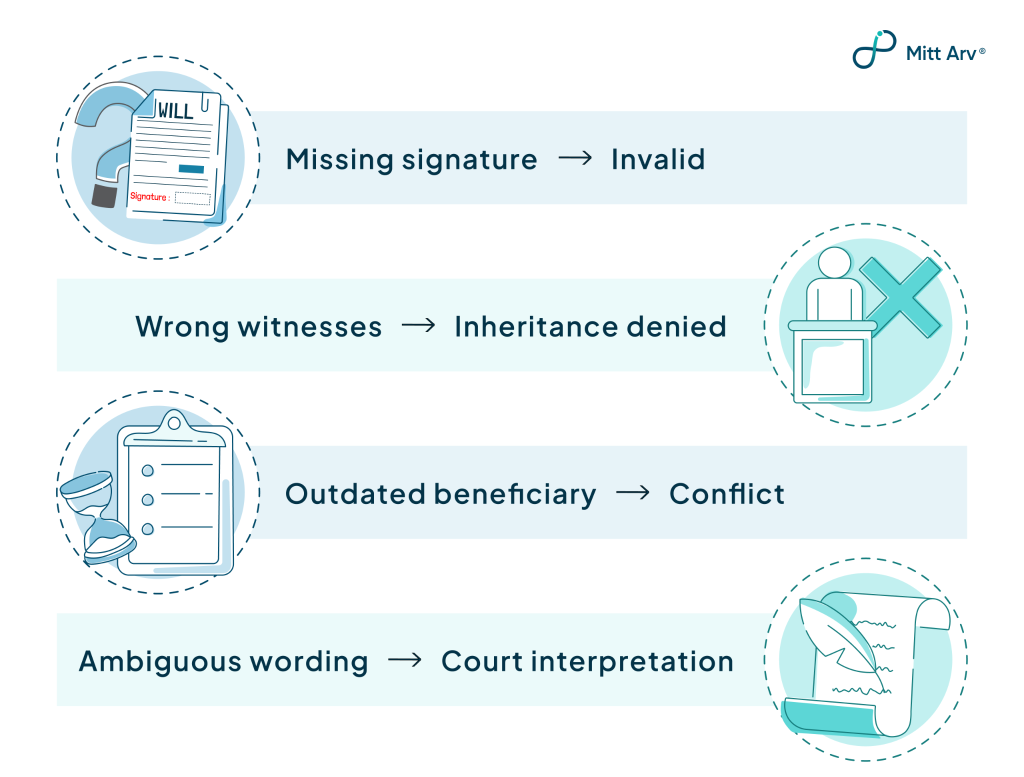
One of the most common mistakes in will-writing is failing to sign the document correctly.
- A will must be signed by the testator (the person making the will)
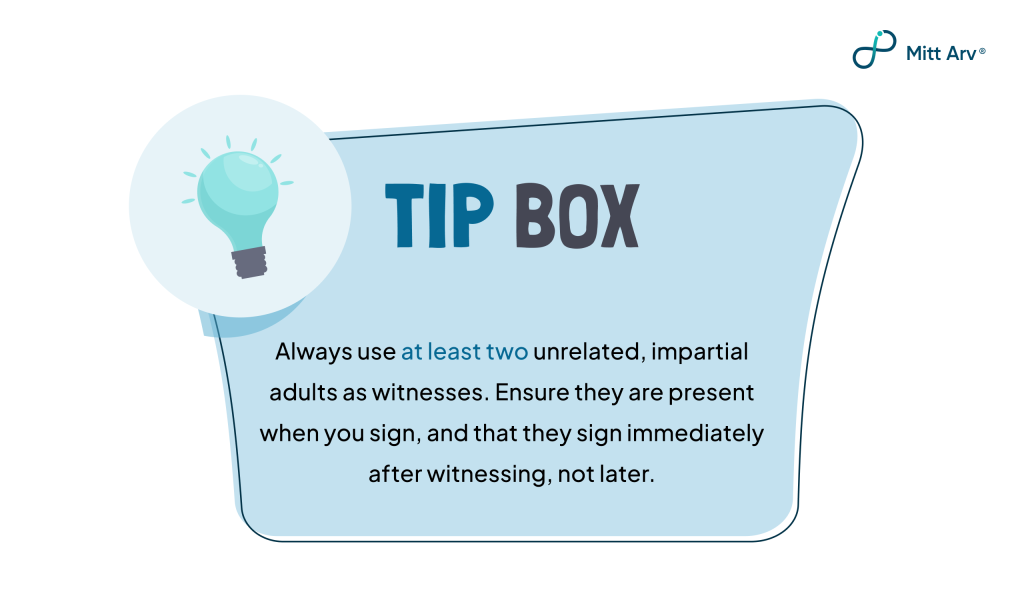
- The testator should sign in the presence of at least two independent witnesses, who themselves sign in the testator’s presence.
- The witnesses must not be beneficiaries (or their spouses).
2. Ambiguous Wills
Wills must be clear, specific, and unambiguous.
Avoid vague phrases like “I leave some jewellery to my daughter”.
Avoid emotional instructions without clarity like “Give my home to whoever needs it most”.
Ambiguity leads to litigation, disputes, and misinterpretation.
3. Not Thinking Beyond Death
A will should address more than just what happens after you pass, it should also include provisions for when you’re alive but unable to make decisions. Consider adding terms that legally outline your healthcare wishes if you’re incapacitated.
4. Not Updating it Regularly
Once you write a will, it’s tempting to “set it and forget it.” But life changes! Review your will every three to five years or after major events like buying property, having a child, getting married or divorced, or relocating.
5. Not Including All Assets
A common oversight is failing to list all assets, tangible and intangible. These may include life insurance, retirement accounts, joint accounts, and digital assets (online accounts, cryptocurrencies, subscriptions).
6. Not Appointing an Executor
Some people forget to appoint an executor, the person responsible for administering the will after death, or choose someone unsuitable. An executor is responsible for carrying out your will. Choose someone trustworthy, organized, and preferably younger. Also, name an alternate executor.
7. Not taking Legal Expertise
Do not forget about the state and country specific laws governing the validity of your Will. Brian Seelinger, Attorney, Knox McLaughlin Gornall & Sennett, P.C. suggests caution on this front. He advices:
“The form of the will and its execution are the crucial formalities that cause a will to be invalidated. The movies and books we all love tend to generalize laws and look for dramatic conditions that are the exception rather than the rule in laws of various states, and will validity are determined by state law. One great example is the belief that a holographic will (written in one’s own hand) is valid regardless of whether it was witnessed. This isn’t the truth in many states; some states only accept a holographic will if it was written while the testator lived in a state that recognizes holographic wills.”
Thus, don’t forget to seek legal guidance while making this important document for your and your loved ones’ peace of mind.
8. Not Planning for the “What Ifs”
What happens if a beneficiary dies before you or your will is settled? As Hung-Lin Lai, Managing Partner, Lai & Turner Law Firm PLLC put it:
“We recommend naming contingent beneficiaries in your will and other estate documents. This ensures that if a primary beneficiary cannot inherit—due to death, inability to be located, or refusal—the assets seamlessly pass to your chosen backup, aligning with your intentions and minimizing potential legal complications. By thoughtfully appointing contingent beneficiaries and keeping your estate plan up to date, you can effectively prepare for unexpected events and ensure a smooth distribution of your assets.”
If your will doesn’t account for this, your hard-earned earnings could be left without a clear recipient, leading to default legal rules that decide who gets what. Always specify backup beneficiaries to avoid this.
9. Forgetting Digital Assets
Digital accounts abound for all of us: social networking, streaming, online banking, etc. If you fail to include these in your will, your family may find it difficult to obtain them for months or even years. For assets like cryptocurrencies, having a plan could save you money. As Thomas Franklin, CEO, Swapped advice:
“A good place to start in the will when securing digital assets and cryptocurrencies is a clear chain of custody for access credentials (private keys, wallet recovery phrase, etc). And this typically means having a combination of both offline and online storage, such as a password manager or encrypted USB stick to keep this important information safe yet accessible. You could give directions as to where to look for these credentials rather than listing them in the will themselves (this could be a security risk).”
10. Improper Storage of Will
A will is useless if your family cannot find it or the original is damaged or if multiple versions exist. It is important to ensure proper custody of your will.
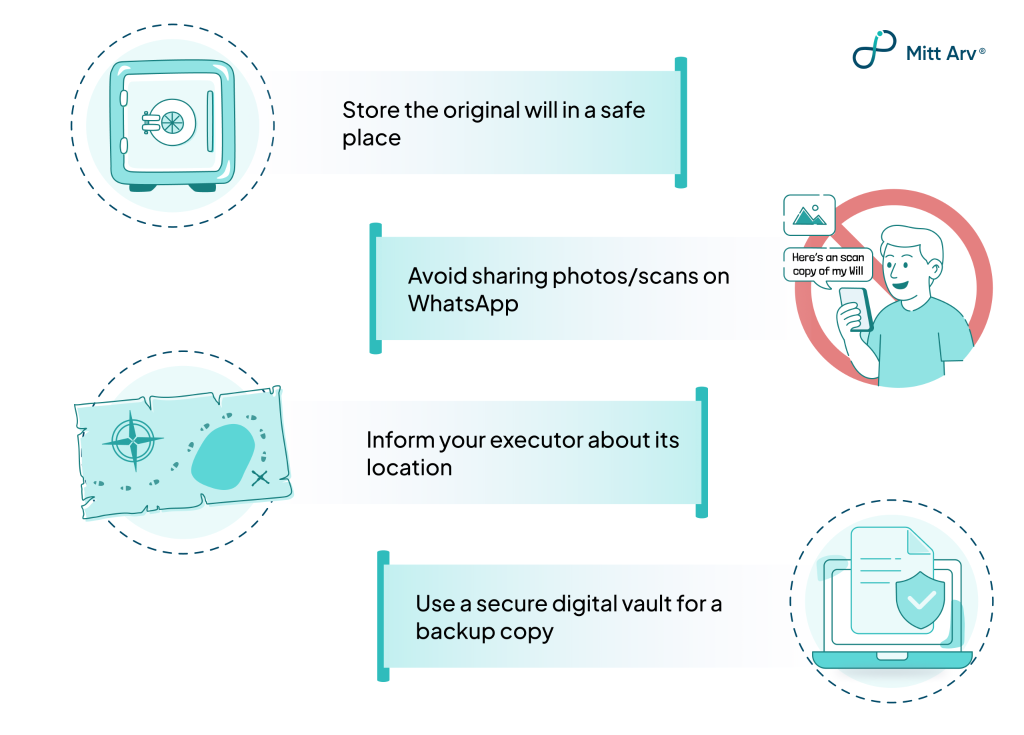
While Mitt Arv does not store wills, its Asset Vault lets you safely list down all your asset details in one place and helps you maintain an updated record of financial, physical, and digital assets. This organised record supports your will and helps your family or executor quickly access the information of your assets when the time comes.
You might wonder if storing your asset information online is safe. Mitt Arv uses globally recognised ISO 27001 and SOC 2 security standards, so your data stays completely protected.
Conclusion
When the paperwork is clear, grief becomes easier. Your voice matters even when you’re not there to speak for yourself. A will ensures your wishes continue to guide your loved ones.
Throughout this guide, we have explored common mistakes while will-making that can prevent individuals from doing so. Ready to create a will? Start with our step-by-step guide and protect your legacy.