

Your data knows you better than your best friend. It remembers the pizza you ordered at midnight, the shoes you almost bought, and the reel you watched fifteen times.
If someone stole your wallet, you’d notice. If someone stole your data, you might never know until your money disappears, your accounts get hacked, or your identity gets abused.
And if you think this is something that happens only to careless users, think again.
Just recently, even OpenAI reported a data leak after their data analytics provider, Mixpanel, was accessed without authorisation by an attacker. No passwords leaked, no systems were hacked, yet the world still panicked.
This incident reminded everyone that even the most advanced tech companies can slip.
If a global AI leader can experience a data mishap, imagine how vulnerable everyday users are when thousands of apps in India collect personal data without strong controls.
This is exactly why India needed the Digital Personal Data Protection Act and the DPDP Rules 2025. These laws tell companies what they can and cannot do with your data.
But a law only works if people understand it. That’s why we’re breaking down the DPDP Rules 2025 so you stay aware and vigilant.
Why the DPDP Act Was Necessary?
India’s digital growth was outpacing its safety measures. Billions of transactions, millions of online identities, and massive amounts of personal data were being handled without clear rules.
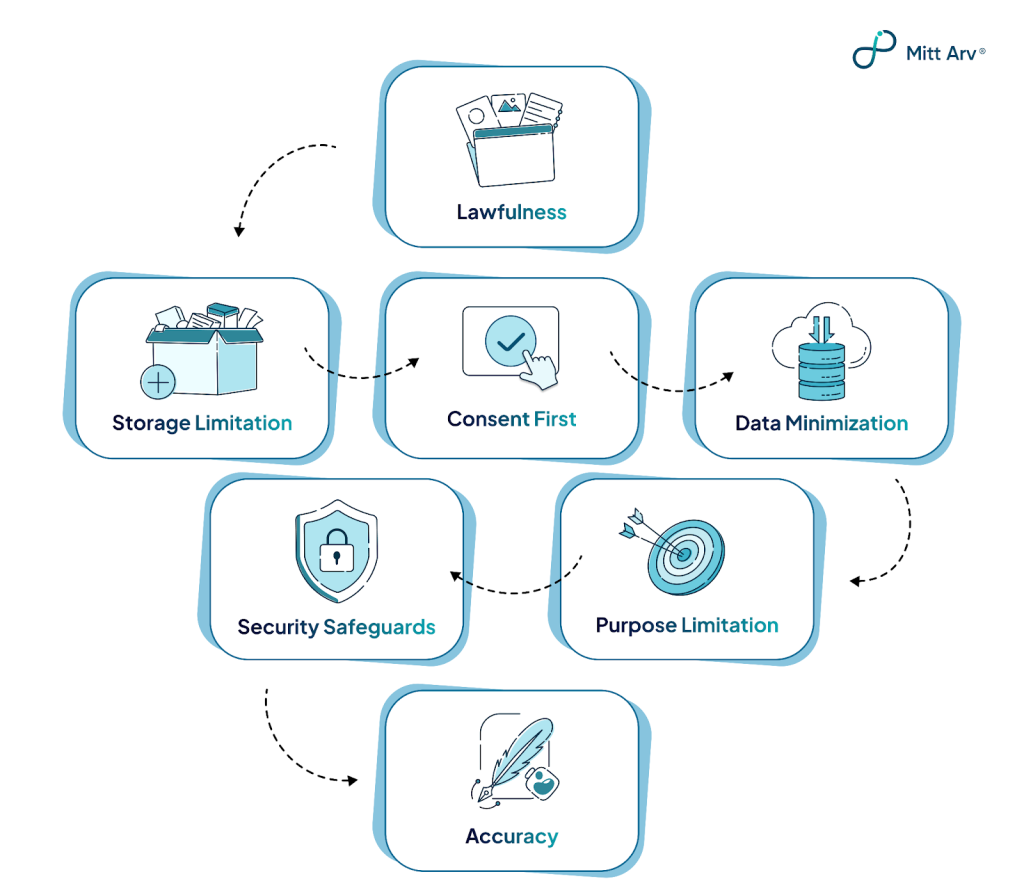
The DPDP Act changed that by:
1. Controlling Excessive Data Collection
Companies can now collect only what is absolutely needed and make sure they tell you why they want it, in simple language. No more “give us your contacts, location, photos, and grandmother’s blood group” for a simple app.
2. Creating Accountability
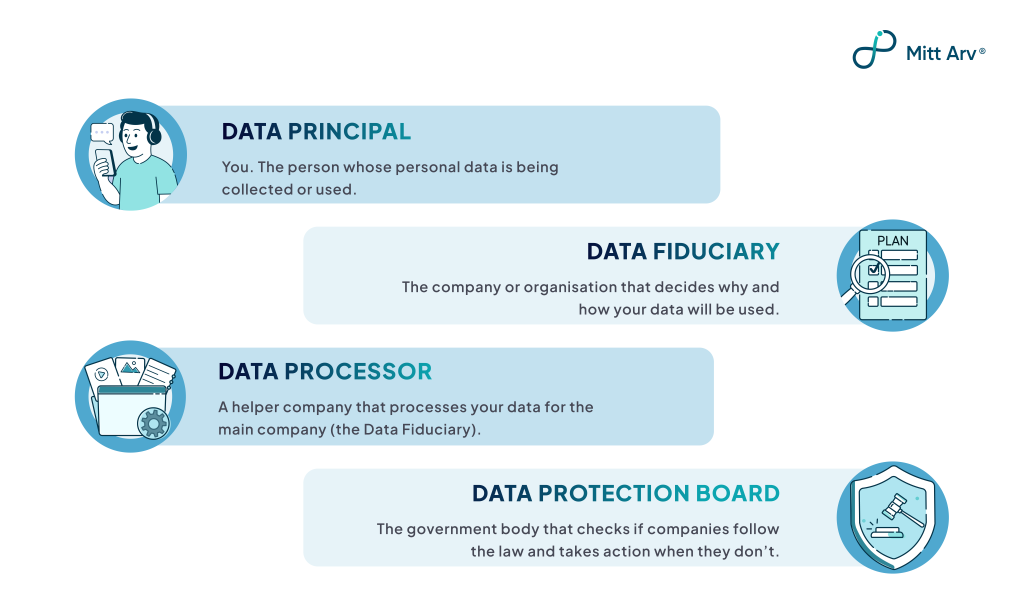
Every service that handles your data, whether it’s a small startup or a tech giant, must follow the DPDP Act compliance rules. The new Data Protection Board (DPB) can investigate complaints and issue penalties.
3. To Address Cybercrime and Fraud
Cyber fraud exploded from 10.3 lakh cases in 2022 to 22.68 lakh in 2024. Losses crossed ₹22,845 crore. The Act pushes companies to secure data better so that breaches become less frequent.
4. To Empower Users
You can access your data, correct it, delete it, or nominate someone to manage your rights. These data principal rights under the DPDP Act make the digital world more balanced.
5. To Provide a Clear Regulatory Structure
The Data Protection Board (DPB) acts as a “digital office” where you can file and track complaints easily. It offers a formal channel for complaints, penalties, and enforcement.
See Also: Legacy Protection in the Modern World
DPDP Rules 2025 Explained: The Key Features You Must Know
1. Scope and Applicability
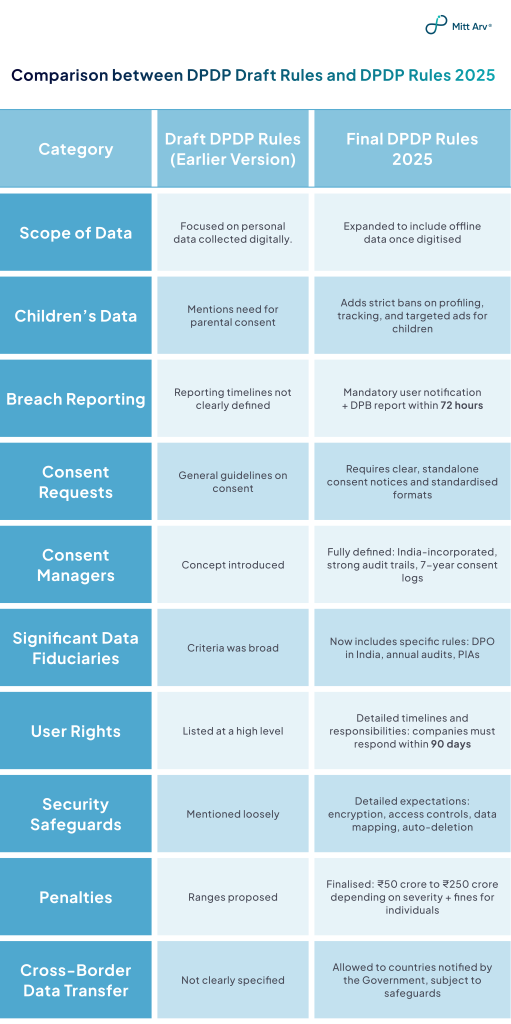
If a website, app, employer, school, hospital, or any platform processes the digital personal data of Indian users, the DPDP law applies. It covers all digital personal data, whether it was collected online or collected offline and later digitised. The law also applies to processing done outside India if the activity targets people in India.
2. Children’s Data
Minors get special protection. Processing a child’s personal data (under 18) requires verifiable parental consent. The rules ban profiling children, targeting ads at them, or tracking them for marketing. Processing is allowed only in limited situations, such as healthcare or education. In short, no more silent tracking or targeted promotions without a parent’s approval.
3. Rights of Data Principals
You have clear rights over your data. You can request a copy of your data, ask for corrections, or request deletion with some exceptions. You can also nominate someone else (like a family member) to exercise these rights if you cannot. Companies must clearly explain how to use these rights and must respond within 90 days.
4. Significant Data Fiduciaries (SDFs)
Platforms that process sensitive or large volumes of data receive additional scrutiny. SDFs must appoint a Data Protection Officer in India, hire independent auditors, and conduct annual Privacy Impact Assessments.
A major app, for example, must routinely evaluate how it handles data and report risks to the Board. If audits uncover problems in algorithms or data practices, the Board can mandate corrective action.
5. Breach Reporting
If a company suffers a data leak, it must disclose it quickly and clearly. Affected users must be informed in simple language:
- What was leaked
- What it means
- What steps are being taken, and
- Whom to contact
At the same time, the company must notify the Data Protection Board and submit a detailed report within 72 hours.
6. Consent Managers
The DPDP Act now introduces Consent Manager platforms. These are neutral, government-approved services where users can centrally give, withdraw, or review consent. They must be India-incorporated, maintain secure audit trails, and keep consent logs for seven years. This makes permissions transparent and easy to manage instead of buried inside random app menus.
7. Company Safeguards
Businesses must raise their security standards. They need to rewrite consent notices in clear language, map and classify the data they collect, strengthen encryption and access controls, and set up automated systems to delete data when it is no longer needed. A shopping app, for example, might adopt end-to-end encryption and purge inactive user records after a set period. These measures are mandatory under the “reasonable security safeguards” requirement.
The DPDP Rules 2025 Explained show that a huge compliance shift is expected across industries.
8. Heavy Penalties
The law imposes serious fines for noncompliance.
- Up to ₹250 crore for failing to protect personal data
- Up to ₹200 crore for not reporting breaches or violating children’s data rules
- ₹50–150 crore for poor consent practices or other lapses
- Up to ₹10,000 for individuals who misuse data intentionally
These massive fines are meant to push companies to act responsibly.
Awareness Keeps You Safe
Understanding the DPDP Rules 2025 Explained is your first step toward digital entitlement. But awareness and vigilance matter just as much.
And the most important part of this new era isn’t the law. It’s you.
You’re the one who decides which apps get access.
You’re the one who can request, correct, or delete your data.
You’re the one who can refuse permissions that don’t make sense.
So stay curious.
Stay cautious.
Stay informed.
Your data is valuable. Your privacy matters. If you are aware, you can navigate the digital world with confidence.
The law is here. The tools are here.
Now it’s your move.
FAQs
Q1. What are the DPDP Rules 2025 in India?
The DPDP Rules 2025 are the detailed regulations under the Digital Personal Data Protection Act that define how personal data must be collected, used, shared, stored, and protected by organisations operating in or targeting India.
Q2. What are the rights of a Data Principal under the DPDP Act?
A Data Principal has the right to access their data, request correction or deletion, withdraw consent, and nominate someone to exercise these rights on their behalf.
Q3. What is a Significant Data Fiduciary (SDF)?
A Significant Data Fiduciary is an organisation handling large volumes or sensitive categories of personal data. SDFs must appoint a DPO, conduct annual audits, perform PIAs, and meet higher compliance standards.
Q4. What are the penalties under the DPDP Act?
Penalties range from ₹50 crore to ₹250 crore depending on the violation, especially for data security failures, non-reporting of breaches, and violations involving children’s data.
Q5. Do DPDP Rules apply to companies outside India?
Yes. Any organisation processing digital personal data of individuals in India falls under the Act, even if the processing occurs outside India.
Q6. What are the 7 principles of the DPDP Act?
The principles include lawfulness, consent-first approach, purpose limitation, data minimization, accuracy, storage limitation, and reasonable security safeguards.
Q7. How can businesses comply with DPDP Rules 2025?
Companies must strengthen consent systems, classify data, appoint Data Protection Officers (if Significant Data Fiduciaries), enable breach reporting processes, set up deletion mechanisms, and ensure strong encryption and access controls.