


Did you know that over ₹1.84 Lakh Crore worth of unclaimed financial assets has already gone to the government in India? From dormant bank accounts and uncashed insurance policies to forgotten mutual funds and matured shares, billions are sitting in state repositories simply because people postponed their estate planning.
Passing away without legal heirs or a will is a cold reality that risks your unclaimed assets falling under the Doctrine of Escheat. Under current Indian law, your assets are easily classified as unclaimed property, granting the state a legal duty to take your life’s work into their hands. This leads to :
- The Escheat Reality: Any estate lacking a rightful heir automatically goes to the state, ending private ownership.
- Financial Foundation at Risk: Assets like bank accounts, mutual funds, and insurance policies are vulnerable to government takeover.
- Real Estate Takeover: Land and your properties face seizure if left ownerless.
- Legal Vulnerability: Passing away without a valid will leaves your family to face legal battles.
Understanding the Escheat Doctrine in Indian Law
The legal mechanism that allows the state to seize unclaimed assets is not an arbitrary exercise of modern political power, but an established rule of law known as the Doctrine of Escheat. When a citizen passes away without leaving a valid will and without leaving any identifiable legal heirs, the estate becomes property without an owner.
Under the principles of constitutional and property law in India, all property that lacks a rightful private owner reverts automatically to the sovereign government entity.
Under Article 296 of the Constitution of India, the state holds the explicit legal right to absorb any property that lacks a rightful owner. When an individual passes away intestate, meaning without a valid will, and leaves behind no recognized family members to inherit the estate, the wealth automatically shifts from private ownership to government hands.
This constitutional framework ensures that ownerless assets across the country vest directly in the State or Union government.
PRINCIPLES OF ESCHEAT Constitutional Basis: This framework is firmly embedded within Article 296 of the Constitution of India. State Ownership of Ownerless Goods: The constitution explicitly mandates that any property within Indian territory that accrues by escheat, lapse, or as bona vacantia (ownerless goods) shall vest in the State or Union government. Consequence of Dying Intestate: If you pass away without leaving a valid will, your estate is highly vulnerable to state takeover. Loss of Private Property Status: If you do not have family members who qualify as legal heirs under personal laws, such as the Hindu Succession Act or the Indian Succession Act, your entire estate officially ceases to be private property. |
What Happens to Different Asset Classes Under Escheat?
The process of state acquisition is highly systematic and impacts every single category of wealth that you accumulate during your lifetime. The consequences across primary asset classes are direct and uncompromising:
- Your Liquid Bank Balance: If a savings or current account remains completely inactive for a continuous period of ten years, banks are legally mandated to transfer those funds to the Depositor Education and Awareness Fund, managed directly by the Reserve Bank of India in New Delhi.
- Your Real Estate (House or Land): Residential apartments, commercial buildings, or plots of land located anywhere from New Delhi to Chennai are placed under the administrative control of the local District Authority or District Collector. The state can clear, reallocate, or utilize this land for public infrastructure projects once the escheat process concludes.
- Your Jewelry and Physical Valuables: Precious metals, family heirlooms, and jewelry secured inside bank locker facilities are subject to strict regulatory inventorying. If lockers remain unpaid or unaccessed without a clear nominee or legal titleholder, the contents can be legally auctioned or seized by institutional authorities to clear outstanding dues, with the residual proceeds moving to state accounts.
The reassuring truth is that this severe legal outcome can be entirely prevented. You can easily protect your family by establishing a legally enforceable, written will that clearly outlines your intentions for your estate.
The Cost of Delay: Leaving Your Legacy to the State
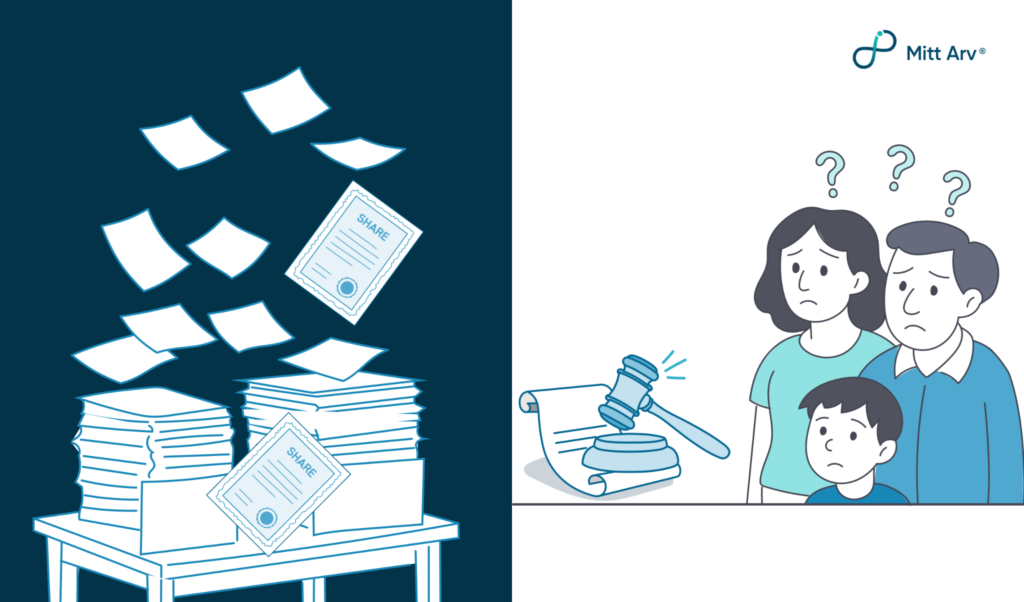
If you are waiting for a later stage in your life to finalize your estate planning, you are essentially leaving your legacy to the state instead of the people you love. Procrastination is the single greatest threat to family wealth preservation in modern India.
Many corporate professionals believe that succession planning is an exclusive requirement for senior citizens or ultra wealthy business dynasties in industrial capitals like Kolkata or Hyderabad. This misconception leaves mid-level families vulnerable to sudden legal complications.
When an asset owner passes away unexpectedly without a clear testamentary document, even if legal heirs do exist, the lack of organization creates severe administrative blockages. Your rightful heirs can be dragged through exhausting court cases lasting years, simply because they did not have a clear will to present to financial institutions and municipal corporations.
To secure inheritance rights, family members are often forced to obtain a legal Succession Certificate, a Letter of Administration, or a Probate from a civil court. This involves high legal fees, tedious bureaucratic delays, and emotional distress during a time of grief.
A Landmark Judicial Shield: Kutchi Lal Rameshwar Ashram vs. The Collector
Supreme Court settled the limits of state control over property. In the landmark case of Kutchi Lal Rameshwar Ashram vs. The Collector, the local government authorities attempted to quickly take control of a prime property by claiming that the original owner had passed away without leaving any legal heirs. This move was challenged by managers of the ashram who claimed a rightful interest in the property.
The Supreme Court of India delivered a crucial judgment on escheat after a lengthy fifteen year legal battle. The apex court ruled definitively that the government cannot simply grab private land or assets through a quick executive order based on a mere assumption.
The court established :
- Strict Legal Burden on the State: If the government wants to claim a property under the doctrine of escheat, it bears the full legal burden of proof in a court of law.
- Proof of No Heirs Required: The state must definitively prove that absolutely no private claimant or legal heir exists anywhere to claim the asset.
- Risk of Unorganized Assets: This landmark case highlights the extreme measures and length the state can go to when a person’s assets are left unorganized.
- Documentation is Key: Clear and organized documentation serves as your only true protection against wrongful state intervention and asset seizure.
Securing Your Wealth and Legacy with Death-Tech
Your assets are at risk of being frozen or claimed escheat rule without a clear, valid will and an organized estate plan. However, a will only works if your heirs actually know your assets exist. Every year, millions of rupees are lost to the government simply because family members are unaware of forgotten bank accounts, fixed deposits, or insurance policies.
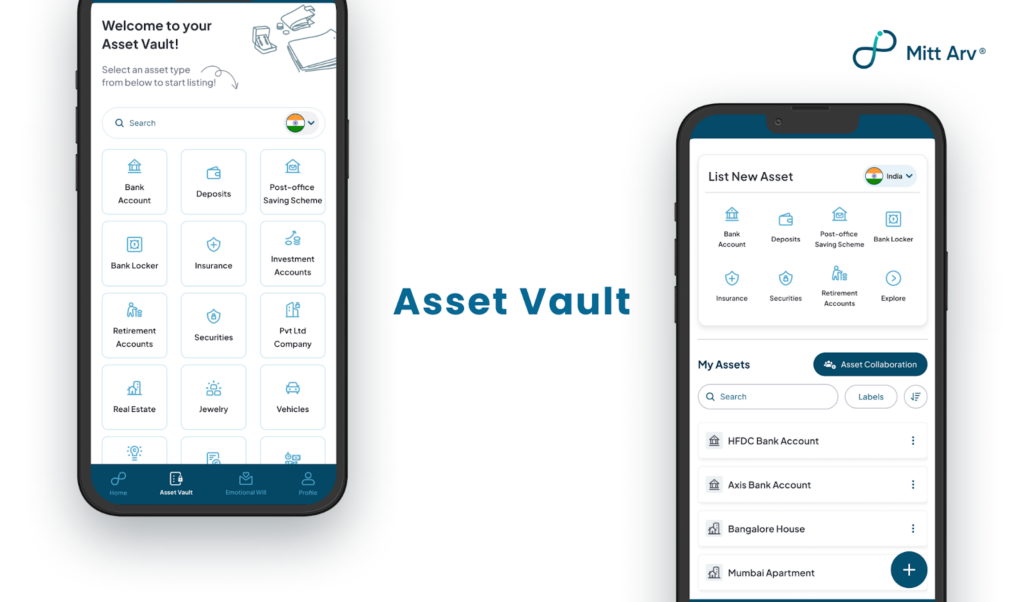
This is where Mitt Arv, an innovative death-tech platform, provides a vital solution. Serving as a secure digital shield for your wealth, Mitt Arv allows you to systematically organize your entire asset portfolio.
By securely storing these details and selectively sharing them with your trusted heirs, it ensures your loved ones are never left in the dark, protecting your hard-earned legacy from being forgotten.
Frequently Asked Questions (FAQs)
1. What exactly does the term Intestate mean under Indian laws?
Passing away intestate means a person has died without leaving a legally valid and enforceable will. In such situations, their property is distributed among surviving family members according to the strict provisions of applicable personal inheritance laws, rather than the personal wishes of the deceased.
2. Can the government claim my property if I have distant relatives surviving me?
No, the government cannot easily claim your property if you have valid legal heirs alive. Under the rule established by the Supreme Court of India, the state must thoroughly prove that absolutely no legal heirs exist before taking an estate under escheat laws. Distant relatives can claim inheritance if they qualify as heirs under personal law.
3. How long does a bank account have to be inactive before money goes to the RBI?
A bank account must remain completely inoperative or unaccessed for a continuous period of ten years before the funds are labeled as unclaimed. At that stage, banks are legally required to transfer the balance to the Depositor Education and Awareness Fund managed by the Reserve Bank of India in New Delhi.
4. Can an unclaimed financial asset be recovered after it is transferred to the government?
Yes, unclaimed financial assets can be reclaimed by the rightful legal heirs or claimants. The process requires filing a formal claim with the specific bank or corporate entity, presenting a valid succession certificate, probate, or clear identification documents, and verifying the legal title to the satisfaction of the government authority.
5. Is adding a nominee to my bank account enough to prevent the escheat rule?
No, adding a nominee is not completely sufficient. Under standard Indian estate laws, a nominee is simply a trusted custodian authorized to receive funds from a bank to avoid immediate friction. The nominee does not become the permanent legal owner of the money unless they are also named as the primary heir in a valid will.
6. What specific role does a platform like Mitt Arv play in estate management?
Mitt Arv serves as an advanced asset organization and information sharing platform. It allows users to securely catalog all financial and physical assets in a single repository and set up secure sharing parameters, ensuring that legal heirs have immediate visibility and access to necessary asset data when required.
7. Does a valid will need to be registered on stamp paper to be legal in India?
No, a will does not legally require registration or stamp paper to be valid in India. It can be written on plain paper. However, it must be signed by the testator in the physical presence of at least two independent witnesses who also sign the document to confirm its execution.
8. What happens to real estate property if a person dies without any heirs in Mumbai or Bengaluru?
If an asset owner dies intestate with no legal heirs in major metropolitan areas, the local municipal corporation and District Collector take temporary physical possession of the real estate. After running mandatory public notices to check for legal claimants, the property is permanently vested with the state government.
9. Can the government seize properties that are currently placed under a valid family trust?
Properties held within a valid, legally registered family trust are protected from the doctrine of escheat. Because the legal title of the assets belongs to the trust entity rather than an individual, the trust continues to operate according to its deed regardless of the death of the settler.
10. At what age should an individual in India begin planning their succession?
There is no minimum age requirement to start estate planning. Any adult who owns assets, regardless of total net worth, should maintain an updated record of their property and a valid will. Early planning is highly recommended for working professionals across India to secure their families’ long-term financial stability.