


Do you think financial planning comes from GenZ Influencers ? What if we tell you that they rephrase what the religions said thousands of years ago.
Long before the era of viral “money hacks” and crypto threads, the world’s major religions were already providing foundational frameworks for managing wealth.
While the tools have evolved from gold coins to digital assets, the core principles of ethical earning, disciplined saving, and legacy planning remain unchanged.
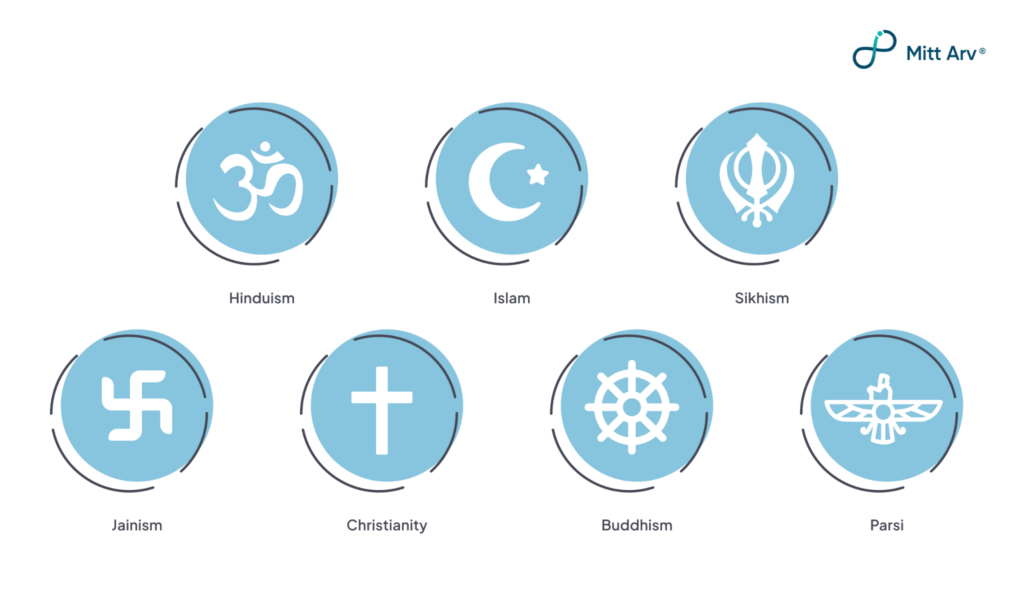
By integrating the teachings of Hinduism, Jainism, Buddhism, Sikhism, Christianity, Zoroastrianism (Parsi), and Islam, we find a universal blueprint for financial wellness and estate management.
While platforms like Mitt Arv solve the ‘how’ of organizing assets, the ‘why’ behind legacy planning has existed for centuries.
7 Dos: What Ancient Traditions Teach About Growing Wealth
1. Earn Through Righteous Means (Hinduism)
In Hindu philosophy, Artha (wealth) is a legitimate pursuit, but it must always be governed by Dharma (righteousness). Earning should never come at the cost of your values or social ethics.
2. Practice Ethical Labor: Kirat Karo (Sikhism)
Sikhism emphasizes Kirat Karo, which means earning an honest living through hard work and physical or mental effort. It rejects exploitation and encourages transparency in every transaction.
3. Follow the Rule of Four (Buddhism)
The Sigalovada Sutta provides a sophisticated budgeting plan: divide your income into four parts. Use one for living expenses, two for investing in your business/work, and one for emergencies and future security.
4. Engage in Productive Stewardship (Christianity)
Christianity views wealth through the lens of stewardship. You are not just an owner but a manager of resources. This encourages “investing talents” rather than letting wealth sit stagnant.
5. Uphold the Principle of Halal (Islam)
Islamic finance focuses on Halal earning and avoiding bad intentions (Riba) to ensure that your wealth is generated from industries that benefit society rather than harming it.
6. Pursue Prosperity for Progress (Zoroastrianism)
Parsi teachings focus on “Good Thoughts, Good Words, and Good Deeds.” Wealth is seen as a tool to improve the world, encouraging followers to be industrious and create prosperity for the community.
7. Balance Consumption with Conservation (Jainism)
While Jainism values simplicity, it also recognizes the importance of the householder’s duty to maintain a stable household through careful conservation of resources and avoiding waste.
7 Don’ts: Spiritual Warnings Against Financial Mismanagement
1. Avoid Extreme Attachment: Aparigraha (Jainism)
Aparigraha teaches non-possessiveness. The goal is to own your assets without letting your assets own you. Over-attachment leads to fear-based decision-making.
2. Don’t Ignore the Duty of Sharing: Vand Chhako (Sikhism)
Wealth should never be hoarded. The principle of Vand Chhako (sharing what you earn with the needy) ensures that money stays in circulation and maintains its “positive energy.”
3. Beware of the Greed Trap (Christianity)
The warning that “life does not consist in the abundance of possessions” serves as a reminder that greed impairs judgment, often leading to high-risk, low-reward financial blunders.
4. Stop Hoarding Without Purpose (Islam)
Through Zakat (mandatory charity), Islam discourages the stagnant hoarding of wealth. Money must flow to keep the economy healthy and support the vulnerable.
5. Don’t Sacrifice Ethics for Profit (Hinduism)
Hindu scriptures warn that wealth gained through Adharma (unrighteousness) is fleeting and brings “Karmic debt,” which eventually leads to legal or personal downfall.
6. Avoid Mindless Consumption (Buddhism)
Buddhism warns against “thirst” or craving. Spending money on fleeting trends or status symbols leads to a cycle of debt and mental unrest.
7. Don’t Neglect the Legacy of Clarity (Zoroastrianism)
Zoroastrianism places a high value on truth and order. Leaving behind a “chaotic” financial trail is contrary to the principle of Asha (truth/order).
Online Trends vs Religious Texts
Loud Budgeting vs. Aparigraha & Mindless Craving
The viral phenomenon of “Loud Budgeting” and #UnderconsumptionCore involves proudly rejecting luxury trends, using everyday goods until they break, and openly prioritizing savings over social status.
This is the exact structural mirror of the Jain principle of Aparigraha (non-possessiveness) and the Buddhist warning against Tanha (mindless craving). Ancient texts argue that a person’s peace is eroded when they let their material assets own their mind.
FinTok has simply modernized this truth: young creators are realizing that constant consumption for the sake of an online aesthetic is a fast track to debt and mental burnout.
Emotional ROI vs. The Sigalovada Sutta
Modern creators urge their followers to look past impulse purchases by calculating an item’s Emotional ROI, evaluating whether a purchase provides real, structured value, long-term health, or a sustainable “cost-per-wear.”
This granular, intentional approach to capital allocation directly aligns with the Buddhist Sigalovada Sutta. When the text prescribes the “Rule of Four” (allocating percentages strictly for livelihood, growth, and emergencies), it removes emotion from the transaction entirely. Both frameworks view capital not as a tool for immediate dopamine, but as a resource that requires premeditated discipline to protect one’s future security.
De-Influencing (“Reali-TEA”) vs. Kirat Karo & Dharma
The massive rise of “De-Influencing” and financial “Reali-TEA” features creators exposing fake “get-rich-quick” schemes, highlighting the realities of generational wealth, and warning against volatile, high-risk assets.
This push for radical transparency directly echoes the Sikh principle of Kirat Karo (earning an honest, transparent living through clear mental or physical effort) and the Hindu framework of Artha governed by Dharma.
Ancient texts explicitly warn that wealth built on Adharma (unrighteousness, illusion, or deception) carries an unstable, destructive energy that eventually leads to legal or personal ruin. Modern users are arriving at the same conclusion: financial systems built entirely on hype, clout, and obscurity are structurally unsustainable.
Bridging Ancient Principles with Modern Tools: Mitt Arv

Ancient wisdom tells us what to do; Mitt Arv provides the how.
Most religions emphasize the duty toward family and the importance of clarity in inheritance. Yet, many people build significant wealth but leave behind zero organization. This is where modern legacy planning meets spiritual duty:
- Organize Your Assets: Transition from ancient ledgers to a secure digital vault.
- Align Your Will: Ensure your wealth follows the “Dharma” or “Righteousness” you intended.
- Secure Sharing: Grant your family access to vital information, preventing the “avoidable chaos” of legal disputes.
- Legacy, Not Confusion: Simplify your estate so your loved ones inherit peace, not paperwork.
Frequently Asked Questions (FAQs)
Q1: How do ancient religious views on wealth apply to modern investing?
Most traditions advocate for “Ethical Investing.” This aligns with modern ESG (Environmental, Social, and Governance) investing, where you choose stocks or funds that do not harm society.
Q2: Which religion first introduced the concept of budgeting?
While many have guidelines, Buddhism offered one of the most specific “percentage-based” budgets in the Sigalovada Sutta, recommending 50% for business reinvestment.
Q3: Is money considered “bad” in spiritual teachings?
No. Most religions view wealth as a neutral tool. It becomes “bad” only when earned dishonestly, hoarded selfishly, or managed with total attachment.
Q4: How can I ensure my digital assets follow these ancient principles of inheritance?
Using a platform like Mitt Arv allows you to organize digital assets, crypto, and traditional investments in one place, ensuring your family has a clear “road map” according to your wishes.
Q5: What is the most common financial advice across all religions?
The most universal advice is Honesty in Earning and Generosity in giving. Every major tradition agrees that wealth is only meaningful when it benefits more than just the individual.