


USA Inheritance Laws sound simple until you realize one inconvenient truth: there is no single law governing it.
Instead, each state has its own framework, its own quirks, and occasionally, its own personality disorder. What applies in California may not apply in Texas, and what works in New York might completely fail in Florida.
So, understanding U.S. inheritance law is less about memorizing rules and more about understanding how those rules change depending on geography.
Here are the key pointers to understanding this fragmented legal landscape:
- State-Specific Jurisdiction: Each of the 50 states has its own probate code; the laws of the state where you are “domiciled” (legally reside) generally govern your personal property.
- Real Estate “Situs” Rule: Unlike bank accounts, physical property like a house is governed by the laws of the state where the land is located, regardless of where the owner lived.
- Intestate Succession: If you die without a Will, state law provides a “default Will.” Some states prioritize the surviving spouse entirely, while others split assets strictly between the spouse and children.
1. The Foundation: Federal Structure, State Control
The U.S. operates under a federal system, which means inheritance laws are primarily governed at the state level. There is no unified national inheritance code that dictates how assets must be distributed after death. Instead, each state legislature creates its own statutes dealing with wills, probate, and intestate succession.
The lack of a unified federal mandate has created a patchwork system where your zip code determines your family’s legal hurdles. While some states aim for consistency, others maintain unique traditions that can complicate cross-state inheritance. Here is what you need to know :
- The UPC Standard: The Uniform Probate Code (UPC) was designed to modernize and streamline the probate process across the country, making it easier for families to navigate.
- Broad Adopters: States like Arizona, Colorado, and Florida have largely adopted the UPC, providing a more predictable and simplified framework for estate administration.
- The “Rejectionists”: Major states like New York and California have largely rejected or heavily modified the UPC, preferring their own complex, long-standing state statutes.
- Procedural Discrepancy: This fragmentation means that a “simple” probate process in a UPC state can be significantly cheaper and faster than in a non-UPC state.
- Cross-Border Complexity: For individuals owning property in multiple states (e.g., a home in NY and a vacation house in AZ), their executors must often navigate two entirely different sets of legal rules simultaneously.
The result is predictable chaos. Two individuals with identical family structures but living in different states may have their estates distributed in completely different ways. In other words, where you die matters almost as much as how you planned.
2. Wills: Control, But Only If Done Right
While a Will provides the framework for your final wishes, state laws ensure you don’t have total autonomy over the distribution of your assets.
- Strict Execution Standards: Most states mandate a written document with at least two witnesses, though the legal acceptance of “holographic” (handwritten) Wills varies wildly across state lines.
- The Spousal Safety Net: You generally cannot entirely disinherit a spouse; most jurisdictions grant them an “elective share” that allows them to legally claim a portion of the estate regardless of the Will’s instructions.
- Regulated Sovereignty: Although a Will grants you significant authority, the law acts as a “co-pilot,” imposing mandatory protections for family members that override your personal preferences.
3. Intestate Succession: When the State Writes Your Will
Steve Chavez From the Wagner, Falconer & Judd Law law Firm
Gives his opinion on why you should write your will :
“Estate planning is one of those tasks that most people know they should do, but often put off. Whether it’s discomfort around discussing mortality, uncertainty about where to start, or the belief that “I don’t have enough to worry about,” many individuals delay putting proper legal documents in place. Unfortunately, that delay can come at a high cost-for you and your loved ones.”
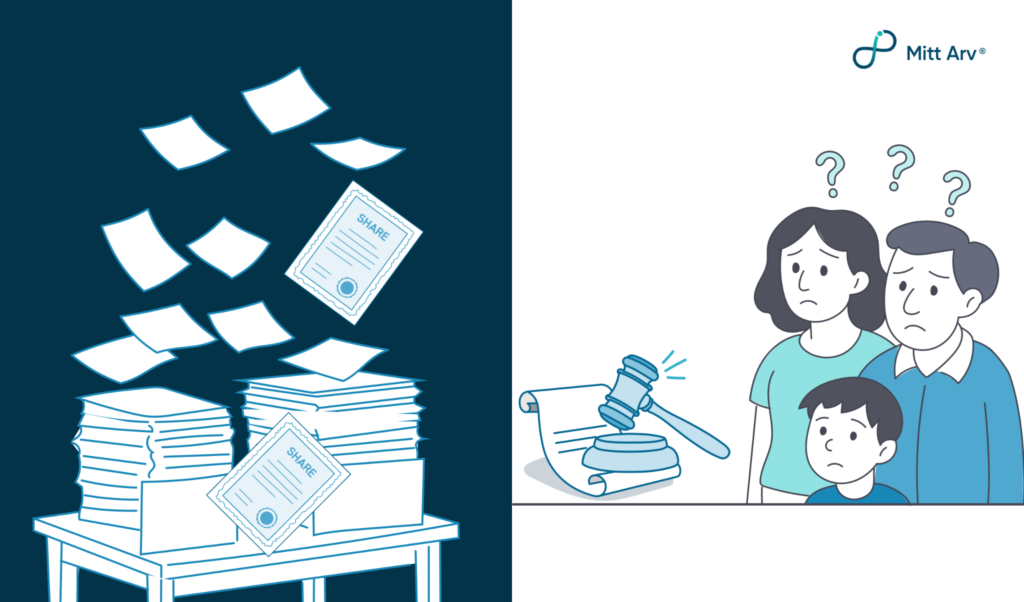
This is more applicable when a person passes away without a will; they are said to have deceased “intestate.” At that point, state law takes over and distributes assets according to a fixed hierarchy. This system, known as intestate succession, is designed for efficiency, not emotional nuance.
When you pass away without a Will (intestate), the state uses a “one-size-fits-all” formula to distribute your wealth, often resulting in outcomes that conflict with your actual wishes.
- The Default Hierarchy: Estates typically flow to the surviving spouse and children first; if neither exists, the law looks “up the tree” to parents and siblings.
- The “Blended Family” Split: If you have children from a previous relationship, state laws often force a split between the current spouse and those children, potentially creating financial tension.
- State-Level Discrepancy: California law may split assets by halves or thirds depending on the number of heirs, while UPC states often award a fixed dollar amount plus a percentage.
- The Escheatment Trap: If no legal relatives are found, your entire estate “escheats” to the state government, turning your life’s earnings into public funds.
4. Probate: The Court’s Slow and Expensive Oversight
Probate is the legal process through which a deceased person’s estate is administered. It involves validating the will, identifying assets, paying debts, and distributing the remainder to beneficiaries.
Despite sounding procedural, probate is often time-consuming and costly. Depending on the complexity of the estate and the state in which probate occurs, the process can take anywhere from several months to a few years. Legal fees, administrative costs, and court expenses can significantly reduce the value of the estate.
Different states also handle probate differently. Some states offer simplified or expedited procedures for smaller estates, while others maintain more formal, court-intensive systems. For example, Texas is known for relatively efficient probate procedures, whereas California’s system is often criticized for being lengthy and expensive.
To avoid probate, many individuals rely on non-probate transfers such as joint ownership, beneficiary designations, and living trusts. These mechanisms allow assets to pass directly to beneficiaries without court involvement, which is often faster and less contentious.
5. Case Law Insight: Hodel v. Irving
A key judicial perspective on inheritance comes from the U.S. Supreme Court decision in Hodel v. Irving (1987). In this case, a federal statute attempted to prevent the inheritance of small fractional land interests belonging to Native American families by automatically transferring them to the tribe upon death.
The Court struck down the law, holding that completely abolishing the right to pass property to heirs violated constitutional protections. The decision reinforced an important principle: the right to transfer property at death is a fundamental aspect of ownership.
While this case does not dictate everyday inheritance rules, it highlights a deeper legal philosophy. Even in a system full of state-level variation, the idea that individuals should have some control over the posthumous distribution of their property is strongly protected.
It is also a reminder that inheritance law is not just administrative. It sits at the intersection of property rights, family relationships, and constitutional values.
6. Why Planning Matters (and Where Mitt Arv Comes In)
If there is one consistent theme across U.S. inheritance law, it is this: failing to plan leads to outcomes you probably did not intend. The combination of state-specific rules, probate procedures, and default succession laws means that inaction is rarely neutral.
It actively shapes who benefits from your estate.

For individuals with cross-border assets, non-traditional family structures, or simply a desire for clarity, estate planning becomes even more critical.
A well-structured plan can minimize disputes, reduce costs, and ensure that assets are distributed according to personal wishes rather than rigid statutory formulas.
This is where platforms like Mitt Arv step in. By simplifying estate planning, organizing asset information, and helping individuals structure their inheritance strategy, Mitt Arv reduces the legal and administrative burden on families. Instead of leaving behind confusion, it enables clarity and control.
Because in a system where even states cannot agree on the rules, leaving things to chance is less of a strategy and more of a gamble.