

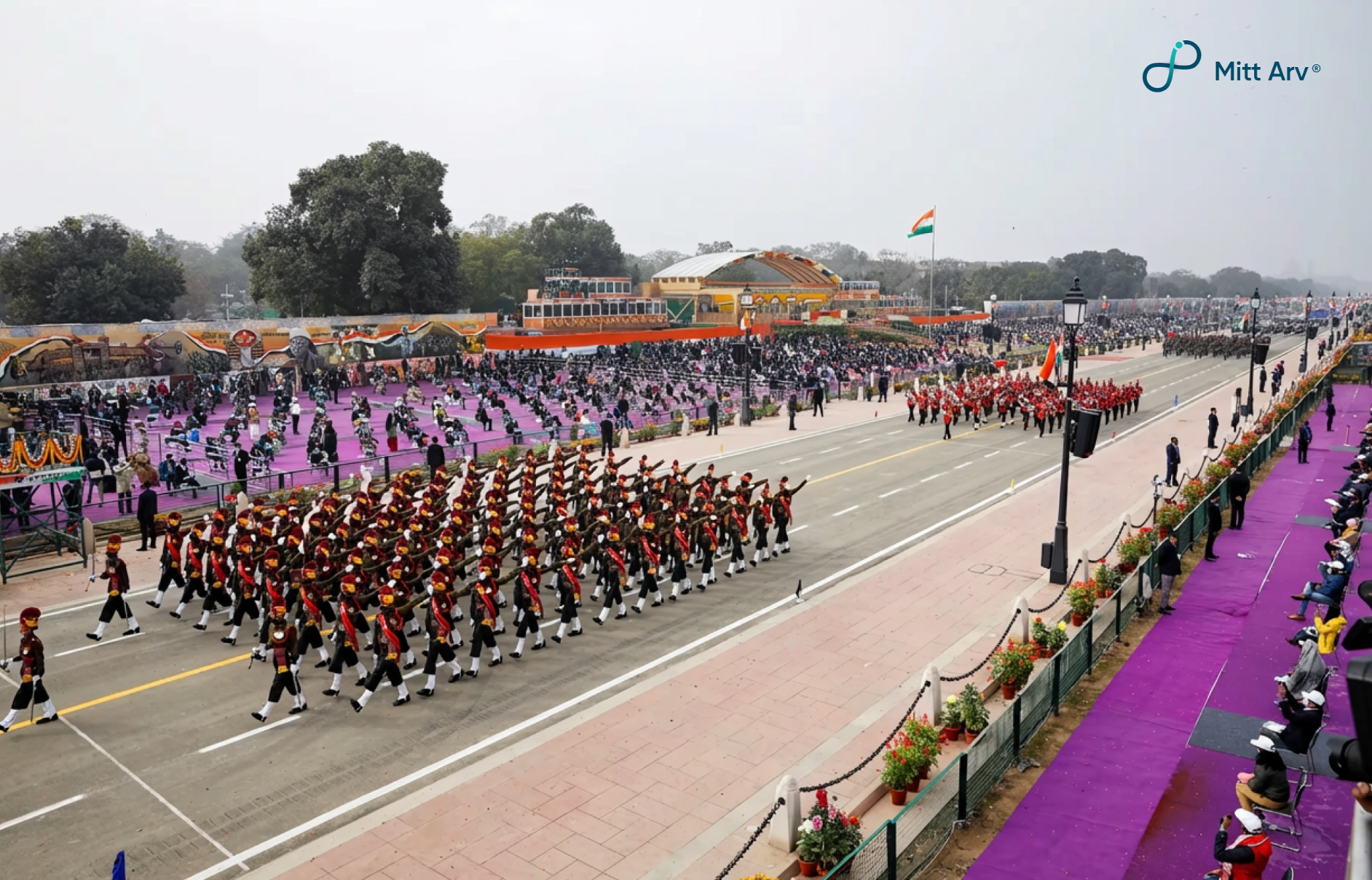
Every year on 26 January, India comes together. There are parades, flags, patriotic songs, and speeches about sacrifice and progress. Republic Day reminds us that India chose to govern itself by intention rather than impulse. By debate. By documentation. By planning.
On the morning of 26 January 1950, the mood in India was not celebratory in the way we imagine it today. There were no live broadcasts or social media posts. What existed instead was a collective understanding that the country was stepping into the unknown.
India had been independent for over two years by then. But freedom alone was not enough. The country needed rules, structure, and clarity. It needed a way to carry its ideals forward, long after the people who fought for them were gone.
So that morning, India chose to live by a document that ran into hundreds of pages, debated over years, drafted with disagreements, compromises, and foresight. A document written not just for the people standing there in 1950, but for generations that would never know the faces of its framers.
That document was the Constitution.
And that decision, to plan beyond one’s lifetime, is the quiet heart of Republic Day.
A Republic Was Not an Emotional Decision. It Was a Planned One.
It is easy to romanticise history. But the making of India’s Constitution was deeply practical.
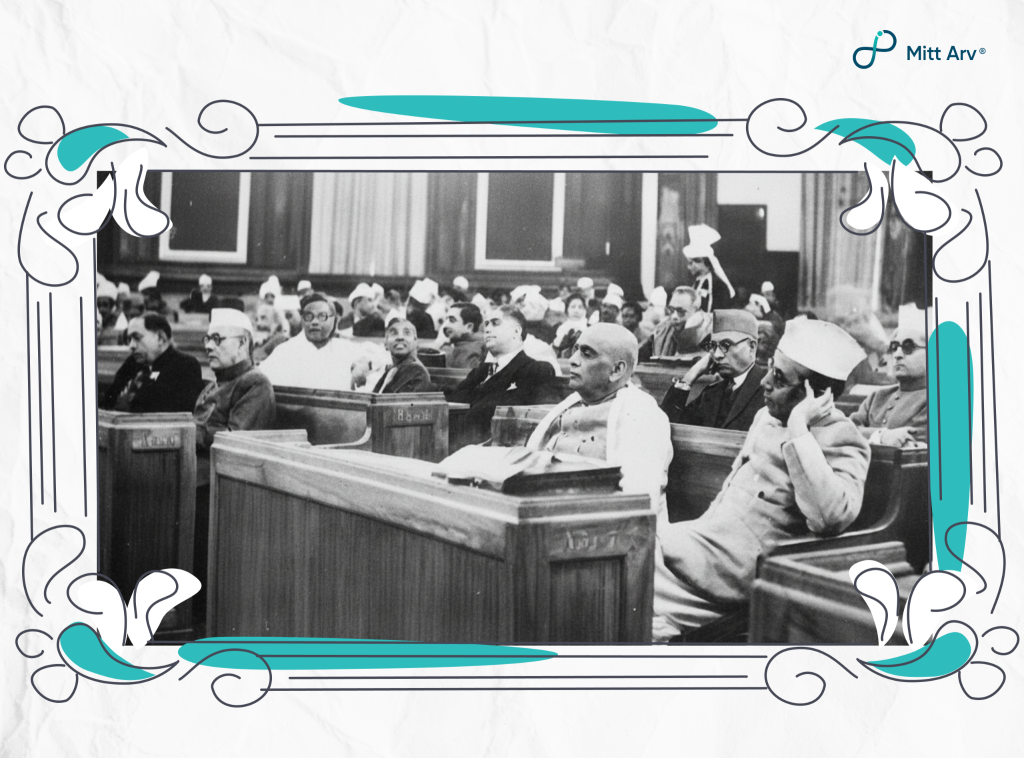
Members of the Constituent Assembly debated for nearly three years. They argued over language, power, rights, and responsibilities. They questioned each other’s assumptions. They worried about misuse of power, breakdown of institutions, inequality, social divisions, and uncertainty. They did not assume goodwill would be enough. They assumed the opposite, that systems would be tested, and people would falter.
B. R. Ambedkar said it clearly in his closing speech: a good Constitution can be misused by bad actors, and a bad Constitution can fail even with good ones. What mattered was clarity of intent and structure.
That belief shaped India’s future.
A Different Scene, Repeated Every Day
Now shift the scene.
A family gathers in a living room after a sudden loss. Shoes are left outside. Conversations are hushed. Somewhere between condolences and rituals, practical questions begin to surface.
Where are the documents?
Who has access to the accounts?
Was there a will?
Did anyone know what they wanted?
No one is thinking about conflict. Everyone believes they are acting with love. And yet, confusion slowly fills the room.
Different memories. Different interpretations. Different assumptions.
This is not uncommon. It is what happens when intent exists, but is never recorded.
What the Constitution Understood That Families Often Don’t
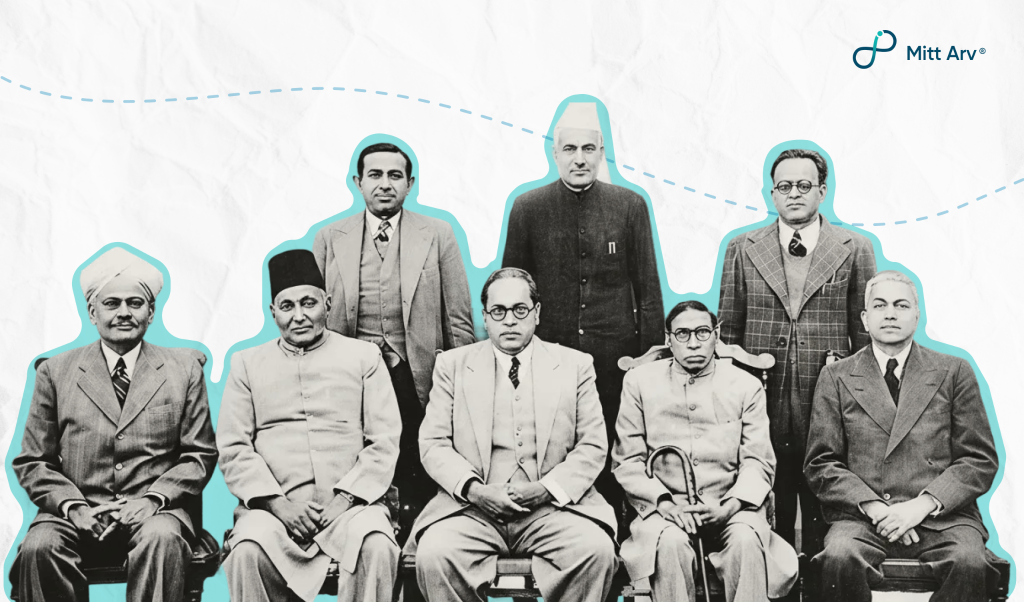
The framers of the Constitution did not rely on assumptions. They relied on documentation.
They did not say, “We trust future leaders to do the right thing.”
They said, “Let us reduce the chances of things going wrong.”
That is exactly what legacy planning does.
A will, a nomination, or a healthcare directive is not about pessimism. It is about reducing ambiguity at a moment when emotions are already heavy.
Assets can be divided by law. Intent cannot. When intent is left undocumented, families are forced to guess. And guessing, even with love, often creates friction.
The Constitution did not eliminate conflict. It gave India a way to resolve it.
Legacy planning does the same for families.
The Preamble and the Personal “Why”
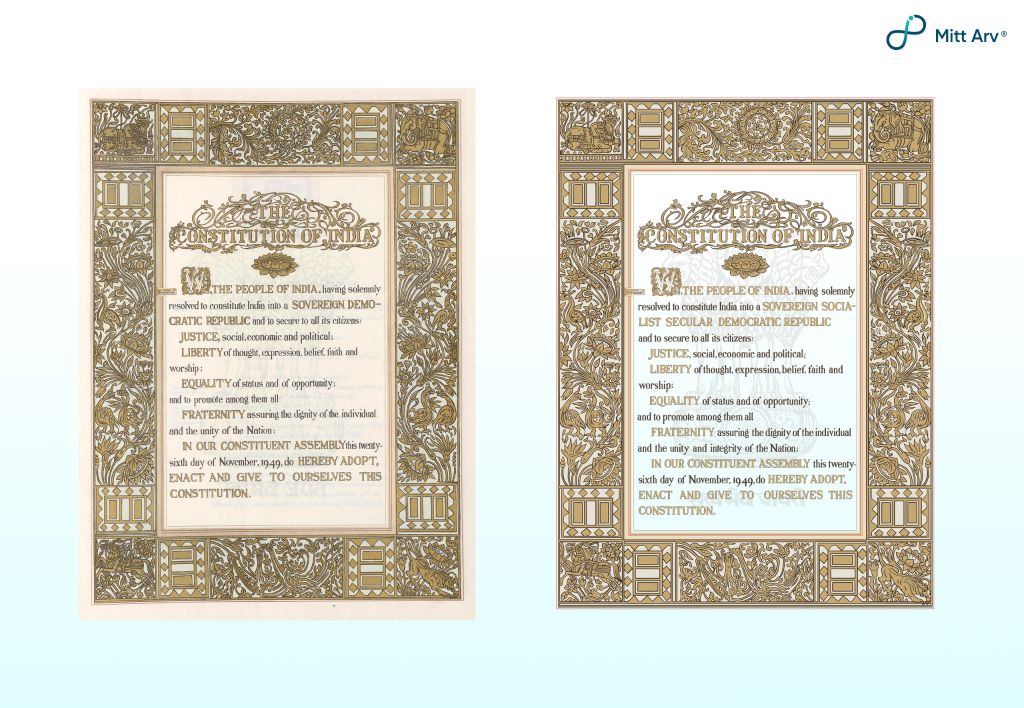
The Preamble begins with values before it begins with power. Justice. Liberty. Equality. Fraternity. These words were not legally necessary, but morally essential.
They told future generations why the Constitution existed.
In legacy planning, this “why” is often the missing piece.
Legal documents distribute assets. They do not explain reasoning. A personal legacy message, your values, your reasoning, your hopes, is the equivalent of a Preamble for your family. It explains not only what you decided but also why you decided it.
And that “why” often prevents resentment more effectively than any legal clause. At Mitt Arv, we believe legacy is not only financial. It is emotional, ethical, and deeply contextual.
Planning Is Not About Expecting the Worst
Many people delay planning because it feels uncomfortable. Talking about mortality feels heavy. Planning feels premature, even superstitious.
But the Constitution was not written because its makers expected failure. It was written because they understood responsibility.
It does not control every decision India makes. It creates a framework within which decisions can be made responsibly. It allows flexibility, amendments, and interpretation, while preserving clarity on fundamentals.
A good legacy plan works the same way. It does not micromanage lives. It provides guidance when guidance is needed most.
The Quiet Parallel We Miss Every Year

Every 26 January, we celebrate foresight at a national level. We honour people who planned for a future they would not live to see. Who wrote things down. Who believed that clarity is kindness.
Yet in private life, planning is often postponed indefinitely. We tell ourselves that the family will sort it out. That things will remain simple. That intention will be understood. But not planning does not keep things simple.
It transfers complexity to people who are already vulnerable.
Ensuring that your family is not left to navigate legal uncertainty, financial stress, and emotional confusion is an act of care. From Mitt Arv’s perspective, legacy planning in India is an act of empathy. It recognises that grief should not come bundled with paperwork, panic, and legal confusion.
If a nation of millions needed a written plan to function smoothly, it is worth asking why we expect families to manage without one. Families deserve the same dignity.
This Republic Day, alongside pride and remembrance, there is an invitation worth accepting: to think beyond ourselves, to reduce future confusion, and to leave behind order instead of uncertainty.
That is how nations endure.
And that is how legacies do too.